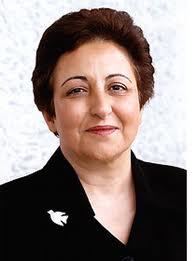
Who She Is: Wangari Maathai is the first African woman and the first environmentalist to win the Nobel Peace Prize. The Nobel Committee lauded her for “her contribution to sustainable development, democracy, and peace.” Maathai is the founder of the Green Belt Movement, an environmentalist, democracy promoter and women’s rights activist. She is the first woman in central or eastern Africa to hold a Ph.D. and the first female head of a university department in Kenya. She was elected to parliament with a stunning 98% of the vote in December 2002 and was subsequently appointed by the president to the position of Assistant Minister for Environment, Natural Resources and Wildlife in Kenya's ninth parliament.
Why We Love Her: In 1977, Maathai started the Green Belt Movement as a grassroots tree planting program aimed at addressing the problems of deforestation, soil erosion, and water shortages. The Green Belt Movement has become one of the world’s most prominent women’s civil society organizations. Based in Kenya, it advocates for human rights, good governance and peaceful democratic change through the protection and preservation of the environment. Its stated mission is to empower communities worldwide to protect the environment and to promote good governance and cultures of peace. In protecting the environment, the women of the Green Belt Movement are becoming powerful champions for sustainable management of scarce resources such as water, equitable economic development, good political governance, and, ultimately, peace.
Today, more than 40 million trees have been planted across Africa. As a result, soil erosion has been reduced in critical watersheds, thousands of acres of biodiversity-rich indigenous forest have been restored and protected, and hundreds of thousands of women and their families are standing up for their rights and those of their communities and are living healthier, more productive lives. Over the next decade, the Green Belt Movement has set a goal of planting one billion trees worldwide. The hope exists that every individual can take part in protecting the environment and creating a healthy natural world that is at the heart of a more equitable and peaceful society.
Wangari Maathai has been recognized internationally for her work in support of democracy, human rights and environmental conservation. She has addressed the UN on several occasions and spoke on behalf of women at special sessions of the General Assembly for the five-year review of the earth summit. Additionally, she was listed on the United Nation Environment Programme's Global 500 Hall of Fame and named one of the 100 heroines of the world.
“It's the little things citizens do. That's what will make the difference. My little thing is planting trees.”
“I placed my faith in the rural women of Kenya from the very beginning, and they have been key to the success of the Green Belt Movement. Through this very hands-on method of growing and planting trees, women have seen that they have real choices about whether they are going to sustain and restore the environment or destroy it. In the process of education that takes place when someone joins the Green Belt Movement, women have become aware that planting trees or fighting to save forests from being chopped down is part of a larger mission to create a society that respects democracy, decency, adherence to the rule of law, human rights, and the rights of women. Women also take on leadership roles, running nurseries, working with foresters, planning and implementing community-based projects for water harvesting and food security. All of these experiences contribute to their developing more confidence in themselves and more power over the direction of their lives.”
http://www.greenbeltmovement.org/


 Ellen Johnson Sirleaf